Storage / Organization
Storage systems by room and constraint
Choose storage by access, visibility and room constraints rather than by container size alone.
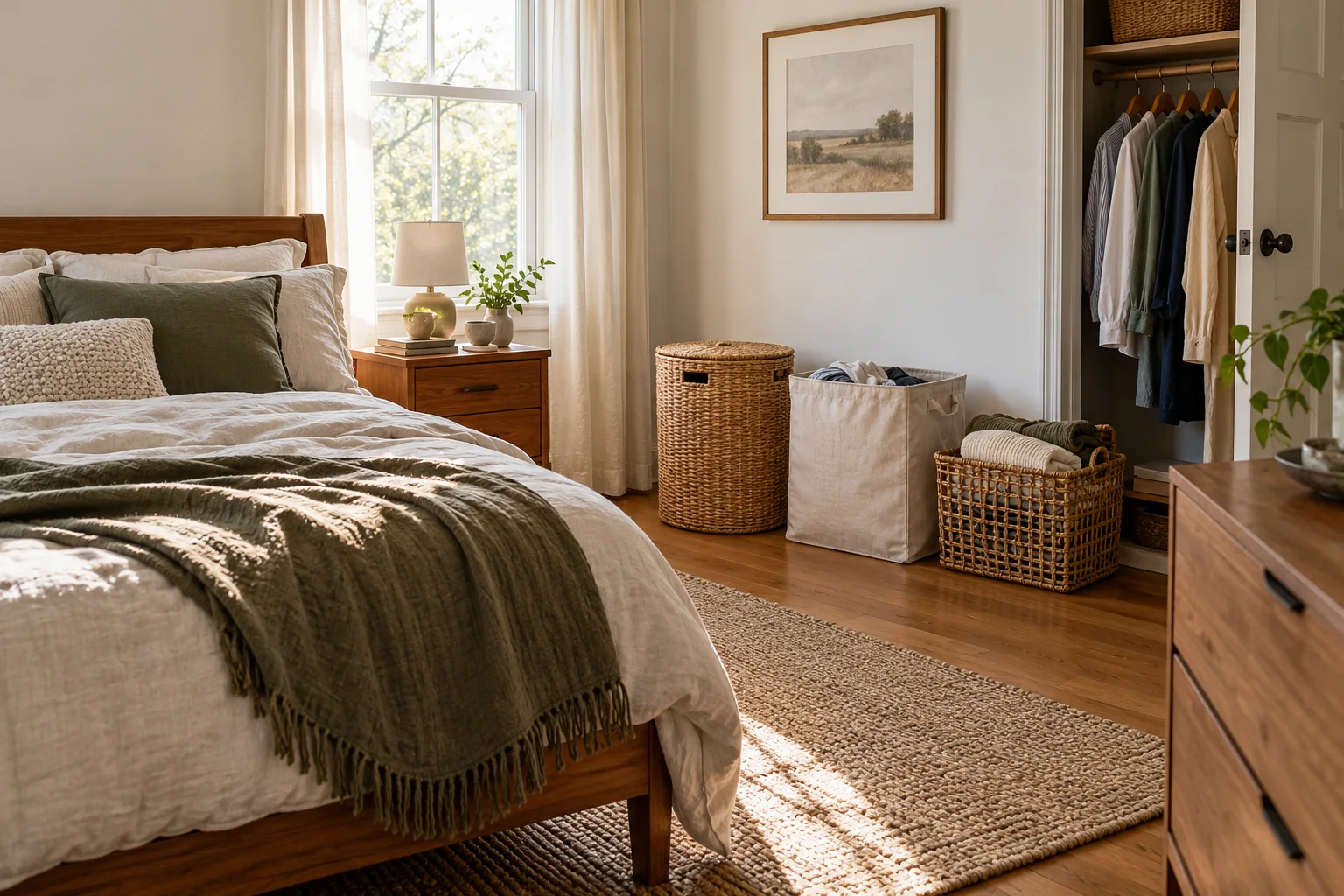
Storage fails less often because a container is too small than because the system asks too much of a busy person. Design around the moment an item is used, the route it takes through the room and the amount of effort required to put it back.
Sort by frequency and person
Separate daily, weekly, seasonal and rarely used items. Daily items should be easiest to reach; rarely used items can accept a higher shelf or less convenient container. In a busy household, design around the person who will actually return items.
Measure the constraint before shopping
Check door swing, drawer clearance, shelf depth, skirting boards, outlets and the path used to carry items into the room. Leave enough clearance to remove one item without unpacking the entire group, and prefer reversible solutions for rentals.
In an entryway, a narrow tray beside the door may outperform a tall cabinet if keys and receipts are dropped there on arrival. In a kitchen, matching containers are less important than a refill rhythm that does not require moving three other items first.
The useful takeaway
Review storage when the room is busy, not only when it is tidy. If the intended person can reach, see and return the item without a special sequence, the system is doing useful work.